
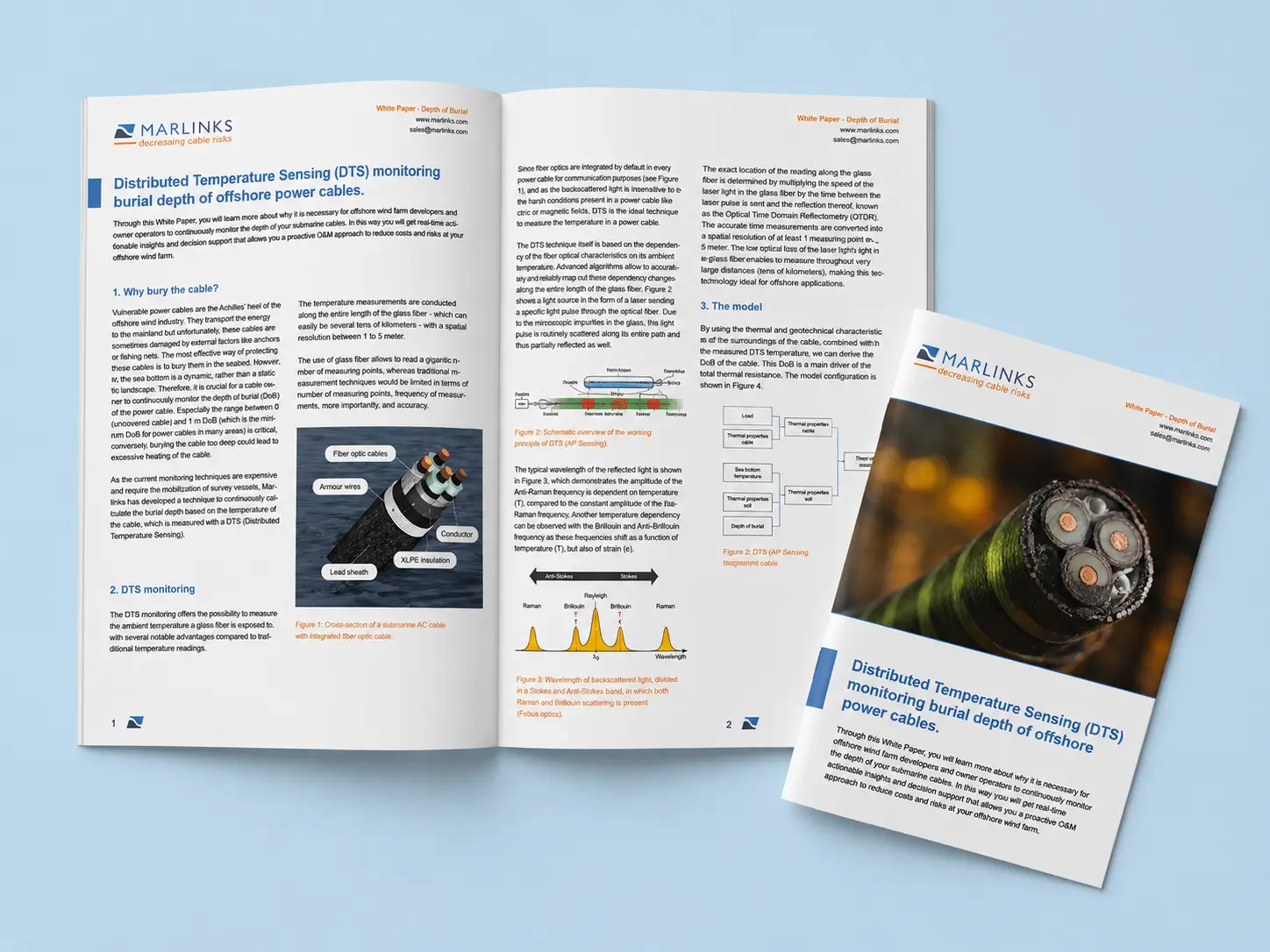
Distributed Temperature Sensing (DTS) Monitoring Burial Depth of Submarine Power Cables

Reliable cable monitoring starts long before a system enters operation. As DTS and DAS technologies continue to gain traction across power cable systems, ensuring these solutions are commissioned and ready for operational use has become an increasingly important industry focus.
To help address this need, CIGRE recently developed the Technical Brochure Guidelines for SAT of DTS and DAS Systems when used for power cable systems monitoring, bringing together international experts to establish structured guidance for Site Acceptance Testing (SAT) of distributed sensing systems.
We are proud to share that Simon De Rijcke, Portfolio Lead at Fluves, contributed to this international working group alongside specialists from around the world.
Distributed Temperature Sensing (DTS) and Distributed Acoustic Sensing (DAS) technologies are becoming established tools for monitoring critical power cable infrastructure. As adoption grows across offshore wind, interconnectors, and other energy assets, the industry is recognizing the importance of consistent commissioning and validation processes to ensure monitoring systems deliver reliable and actionable insights from day one.
The Technical Brochure addresses this need by defining practical SAT guidelines for DxS systems used in power cable monitoring applications. The document aims to support more reliable deployments, clearer performance validation, and improved operational confidence for asset owners and operators.
For operators, a structured SAT process helps ensure monitoring systems are configured correctly, validated before entering service, and ready to provide meaningful data that can support maintenance and asset management decisions.
One of the strengths of CIGRE is its ability to bring together technical expertise from across the global energy sector. Working groups like this combine perspectives from utilities, technology providers, researchers, and infrastructure specialists to address emerging challenges collaboratively.
For Fluves, contributing to initiatives like this reflects more than participation alone. It reflects our commitment to supporting the development of reliable and operationally valuable monitoring solutions for critical power infrastructure.
By collaborating with industry experts and sharing practical experience from monitoring projects, we can help contribute to the best practices that support the future of power cable monitoring.
At Marlinks, we believe successful monitoring extends beyond the sensing technology itself. The value of monitoring systems depends on how effectively they are integrated into operational environments and used to support day-to-day decision-making.
This principle closely aligns with the objectives behind the CIGRE Technical Brochure and remains a key focus in our approach to subsea cable monitoring.
We are proud to support the work of CIGRE and collaborate with industry experts worldwide to advance the reliability and long-term value of fiber optic monitoring solutions.
In a future article, we will explore this topic in more detail and share how the integration of monitoring systems into operational workflows helps transform measurements into actionable insights.